Introduction to AI Talking Photo Generators
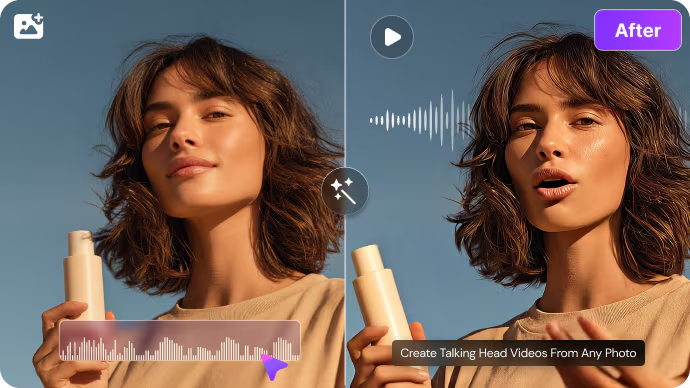
AI talking photo generators represent an innovative convergence of artificial intelligence and digital media, enabling the transformation of static images into dynamic, engaging visual content. These sophisticated tools utilize advanced algorithms to analyze and manipulate photographs, adding realistic human-like speech and animation, thereby creating an interactive experience for viewers. The technology harnesses machine learning models to synthesize speech patterns and facial movements, effectively breathing life into still images.
At its core, AI talking photo generators work by employing neural networks to understand and replicate the nuances of human communication. By processing a wide array of image datasets, these generators can accurately identify key facial features and emotional expressions. The subsequent integration of text-to-speech technologies allows them to produce an auditory narrative that coincides with the visual representation, thereby enriching the user’s engagement. This two-fold approach not only captures attention but also facilitates information retention, making it a powerful tool in promotional strategies.
In today’s highly competitive market, businesses are constantly seeking novel methods of engagement to capture the interest of potential customers. AI talking photo generators offer unique opportunities to enhance marketing campaigns, allowing companies to present their brand stories in a captivating manner. By leveraging this technology, businesses can personalize customer interactions, create interactive advertisements, and elevate their social media presence. As a result, these generators are increasingly integrated into marketing toolkits, showcasing their significance in modern business promotional strategies.
Benefits of Using AI Talking Photo Generators in Business
In the rapidly evolving landscape of digital marketing, businesses are constantly seeking innovative methods to enhance their promotional strategies. One such method that has gained significant traction is the use of AI talking photo generators. The integration of this technology presents numerous advantages that can substantially elevate a business’s marketing efforts.
One of the most notable benefits is increased engagement. AI talking photo generators create dynamic, interactive content that captures the attention of potential customers. This innovative approach utilizes engaging visuals coupled with auditory elements, effectively drawing the viewer’s focus and encouraging interaction. This heightened level of engagement provides businesses with better opportunities to showcase their products or services, fostering a more memorable connection with their audience.
Another significant advantage of using AI talking photo generators is enhanced personalization. In today’s market, consumers expect a personalized experience that speaks directly to their preferences. AI-driven content can be tailored to reflect the individual interests of customers, making them feel valued. By utilizing data analytics, businesses can create customized talking photo experiences that resonate with differing audience segments. This level of personalization not only improves user experience but also aids in building brand loyalty.
Moreover, the potential for higher conversion rates cannot be overlooked. With the combination of engaging content and personalized interactions, AI talking photo generators foster an environment conducive to increased sales. As customers engage with content that feels relevant and tailored, they are more likely to take action, ultimately leading to higher conversion rates. This technology allows businesses to optimize their marketing strategies, ensuring that they deliver messages that align with their audience’s expectations.
How AI Talking Photo Generators Work
AI talking photo generators utilize advanced technologies, including machine learning algorithms and neural networks, to convert static images into dynamic, animated visuals. At the core of these tools is a complex set of algorithms designed to analyze images, detect facial features, and simulate speech and expressions based on predefined attributes.
The process typically begins with image input. Users upload a static photo, which the AI system scans to identify key landmarks, such as eyes, mouth, and nostrils. This identification is generally powered by deep learning models that have been trained on vast datasets of human faces. By employing techniques such as convolutional neural networks (CNNs), these models can ascertain the facial structure and predict how the image can be animated.
Once the facial features are recognized, the next step involves creating a digital avatar that mimics the appearance and speech of the person in the image. This involves mapping the mouth and facial movements to audio input, which might be pre-recorded speech or synthesized using text-to-speech technology. The AI generates realistic animations by applying viseme models, allowing the image to sync with spoken words, enhancing the illusion of life.
Additionally, AI talking photo generators often include voice modulation features that can adjust tone, pitch, and accent, further personalizing the experience. Some platforms provide users with customization options to refine the visual style and characteristics of the output, ensuring alignment with the intended messaging and branding.
Overall, these AI-driven tools essentially bridge the gap between static imagery and dynamic communication, offering businesses innovative ways to engage with their audiences. By understanding the technology that powers AI talking photo generators, businesses can better leverage these tools for effective promotional strategies.
Types of AI Talking Photo Generators Available
In the realm of promoting businesses through innovative media, AI talking photo generators have emerged as powerful tools, catering to a variety of user needs and budgets. These platforms harness sophisticated algorithms to create animated images that can engage and inform an audience effectively. The following are the main types of AI talking photo generators available in the market today.
The most basic category includes simple tools designed for casual users and small businesses. These generators typically offer user-friendly interfaces with limited customization options, allowing users to create animated photos quickly. Features often include pre-set templates, basic editing capabilities, and the ability to incorporate text or voice overlays. These tools are generally cost-effective, with many offering free versions with essential functionalities.
On the other end of the spectrum are advanced platforms that cater to larger businesses or organizations looking for comprehensive solutions. These generators often come with extensive features, including advanced animation techniques, AI-driven customization options, and the ability to analyze viewer engagement metrics. Additionally, many of these platforms support multi-language capabilities, making them ideal for businesses aiming to reach a global audience. Pricing for these advanced generators can range significantly, often based on subscription models that provide access to additional features and ongoing support.
Some platforms also offer integrations with social media and marketing tools, allowing businesses to seamlessly share their creations across various channels. Moreover, as technology continues to evolve, new features such as real-time feedback and interactive elements are becoming increasingly common, enhancing user engagement. Overall, understanding the types of AI talking photo generators available—ranging from simple to advanced—helps businesses select the right tool that meets their specific promotional needs and budgets effectively.
Case Studies: Successful Business Uses of AI Talking Photo Generators
As businesses increasingly seek innovative methods to captivate their audience, AI talking photo generators are proving to be invaluable assets. Numerous companies have integrated this technology to enhance their marketing strategies, leading to impactful results. One notable example comes from a skincare brand that utilized AI talking photo generators to create dynamic product advertisements. By transforming static images of their products into engaging audiovisual narratives, the brand saw a 25% increase in customer engagement across social media platforms. This psychological effect of seeing products come to life through conversation significantly attracted potential customers, which in turn boosted sales numbers.
Another impressive case study involves an educational institution that utilized AI talking photo technology to promote their online courses. The institution created a series of engaging character-based videos featuring animated professors who could explain course outlines. The personalization of learning made possible through talking photo generators encouraged a 40% rise in enrollment numbers. Prospective students expressed that the friendly, interactive format of the content made the institution seem more approachable, demonstrating the potential of these tools in the education sector.
A retail company also leveraged AI talking photo generators to provide a virtual shopping experience. By utilizing this technology, they created avatars of their style advisors who could give personalized product recommendations based on user preferences. This approach not only improved customer satisfaction but also resulted in a 30% boost in the overall conversion rate. Such applications highlight the versatility of AI talking photo generators in redefining customer interaction across various industries.
These examples clearly illustrate how employing AI talking photo generators can significantly elevate marketing efforts. By transforming traditional image content into more interactive formats, businesses can connect with their audience on a deeper level, driving engagement and ultimately enhancing their bottom line.
Integrating AI Talking Photo Generators into Your Marketing Strategy
The integration of AI talking photo generators into a marketing strategy can transform the advertising landscape for businesses seeking innovative ways to engage potential customers. To leverage the full potential of these advanced tools, it is crucial for companies to adopt a strategic approach that aligns with their brand objectives and target audience demographics.
First, businesses should identify specific marketing goals that AI talking photo generators can contribute to. For instance, if the aim is to enhance customer engagement, integrating talking photos into social media campaigns or email marketing can make the content more interactive and relatable. Engaging visuals paired with AI-generated verbal content can effectively capture audience attention and increase viewer retention rates.
Next, it’s essential to ensure that the content produced by AI talking photo generators reflects the brand’s voice and message. Businesses should invest time in customizing the generated photos and the scripted dialogue to maintain consistency in branding and tone. Companies can choose to create personas that resonate with their target audience, establishing a stronger connection through storytelling. This can significantly enhance customer experience and foster brand loyalty.
Moreover, the integration process should involve testing and iteration. Collecting data on user engagement and feedback will help refine the AI talking photo output and its placement within marketing campaigns. A/B testing different approaches and monitoring the effectiveness of various talking photo styles will provide insights into consumer preferences and drive further optimization.
Finally, promoting the use of AI talking photo generators in offline strategies—such as events, promotions, or point-of-sale displays—can further amplify their impact. By employing a multi-channel approach where customers encounter talking photos across various platforms, businesses can enhance visibility and create cohesive brand experiences.
Challenges and Considerations with AI Talking Photo Generators
While AI talking photo generators represent a significant advancement in technology, their implementation in business promotion comes with its own set of challenges and considerations. One of the most pressing concerns relates to authenticity. As businesses increasingly rely on AI-generated content to engage their audience, there is a risk that consumers may become skeptical of the authenticity of the messages conveyed. If users cannot distinguish between genuine human interaction and AI-generated communication, it can lead to a loss of trust in the brand.
Another critical challenge is the necessity for high-quality images. AI talking photo generators require high-resolution images to create convincing content. Poor-quality images can result in blurry or unprofessional presentations that detract from the intended message. For businesses looking to maintain a polished image, investing in high-quality visuals is essential. Not only do these images need to be optimized for AI applications, but they should also resonate well with the target audience.
Moreover, businesses must consider the potential for miscommunication. AI talking photo generators generate images that may not always accurately represent the intended message or brand ethos. If the generated content deviates from the brand’s established voice or style, it can confuse or alienate potential customers. Understanding the limitations of AI technology is crucial for ensuring that the generated content aligns with the overall brand strategy.
Furthermore, there may be legal considerations regarding the use of AI-generated images. Copyright issues can arise if the original images used are not properly licensed or if the AI model has been trained on content without appropriate rights. Therefore, it is imperative for businesses to understand both the creative and legal implications of using AI talking photo generators in promoting their services.
Future Trends in AI Talking Photo Technology
The landscape of AI talking photo technology is evolving rapidly, with several emerging trends poised to influence its application in business promotion. One notable trend is the increasing integration of personalized content into AI-generated media. Businesses are beginning to leverage data analytics to create tailored messages that resonate with specific target demographics. This personalization enhances viewer engagement and provides a more immersive user experience.
As we advance, advancements in natural language processing (NLP) will also play a crucial role in developing more sophisticated talking photos. Current systems often struggle with contextual nuances, but as NLP technology matures, we can expect AI talking photos to produce more conversational and relatable content. This level of linguistic proficiency will not only improve interaction but will also foster stronger connections between consumers and brands.
Moreover, the incorporation of augmented reality (AR) is set to redefine how businesses use AI talking photos. By combining these technologies, businesses can offer interactive experiences that engage consumers in innovative ways. For instance, a customer could view a talking photo through an AR application, allowing for an enriched storytelling approach that captures attention and drives up conversion rates.
Another trend to monitor is the potential for collaborative technologies that enable multiple stakeholders—such as advertisers, content creators, and consumers—to co-create talking photos. This collaboration can lead to diverse perspectives and richer content, further enhancing the effectiveness of promotional strategies. Additionally, ethical considerations surrounding AI-generated content will likely be at the forefront, prompting discussions about authenticity, representation, and audience impact.
Overall, the future of AI talking photo technology is bright, marked by personalization, advanced NLP, integration with AR, and collaborative frameworks. As these trends evolve, businesses will increasingly rely on this innovative medium to captivate audiences and promote their products and services effectively.
Conclusion: The Future of Business Promotion with AI Generators
As businesses continue to evolve in an increasingly digital landscape, the integration of AI talking photo generators emerges as a revolutionary tool for promotion. These innovative devices leverage artificial intelligence to generate engaging visual content that resonates with target audiences, setting a new standard in marketing strategies.
The key points discussed throughout this blog post highlight the significant advantages that AI talking photo generators offer. Firstly, they enhance customer engagement by providing personalized and interactive experiences. By utilizing existing images and giving them a voice, businesses can create memorable connections with potential customers, resulting in increased interest and higher conversion rates.
Furthermore, these generators streamline content creation processes, enabling businesses to produce high-quality promotional materials with minimal resources. The combination of speed and creativity not only saves valuable time but also allows for greater flexibility in campaigns. With the ability to rapidly adopt trending visuals and messages, companies can remain relevant in a fast-paced market.
Additionally, AI talking photo generators can harness data analytics to refine marketing strategies. By understanding audience preferences and behaviors, businesses can tailor their promotional efforts more effectively, ensuring that campaigns yield optimal results. This capability embodies a proactive approach to marketing, allowing companies to respond to market fluctuations and consumer demands promptly.
In conclusion, as artificial intelligence continues to advance, embracing AI talking photo generators can be a game changer for businesses seeking to enhance promotional tactics. The potential impact on engagement, efficiency, and adaptability cannot be understated. It is advisable for companies to consider incorporating this innovative tool into their marketing strategy to stay ahead in a competitive landscape.